No products in the cart.
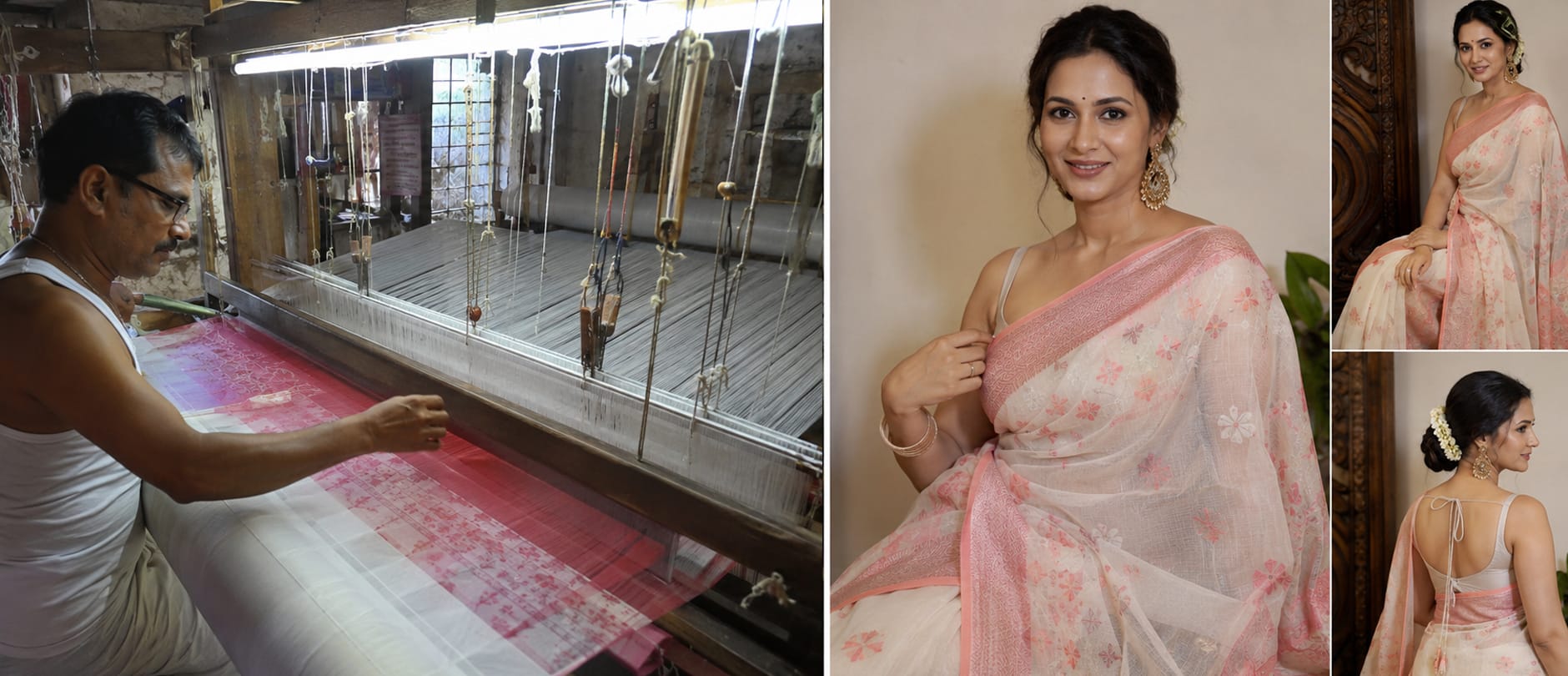
In a world driven by fast fashion and machine-made textiles, Jamdani stands as a timeless reminder of India’s rich weaving heritage. Delicate, artistic, and deeply rooted in culture, Jamdani weaving is more than just a craft — it is a story passed down through generations. Originating from the heart of Bengal, these exquisite weaves have travelled across centuries to become a cherished part of wardrobes around the world.
Today, the elegance of a Cotton Jamdani Saree continues to capture the attention of fashion lovers who appreciate craftsmanship, heritage, and understated luxury.
The Origin of Jamdani: A Legacy Woven in Bengal
Jamdani weaving traces its roots back to ancient Bengal, particularly regions that are now divided between West Bengal and Bangladesh. Historically patronised by Mughal emperors and elite families, Jamdani was considered one of the finest muslin textiles ever created.
The word “Jamdani” is believed to come from Persian origins — “Jam” meaning flower and “Dani” meaning vase or container — reflecting the intricate floral motifs that define the weave. What made Jamdani extraordinary was not just the softness of the fabric, but the detailed handwoven patterns crafted directly onto the loom without printed designs or embroidery.
For centuries, Bengal’s humid climate and skilled artisans made the region ideal for producing these lightweight masterpieces.
The Art Behind the Weave
Unlike ordinary weaving techniques, Jamdani is an intricate supplementary weft weaving method. Every motif is individually handwoven into the fabric, making the process highly labour-intensive and artistic.
Creating a single saree can take weeks or even months depending on the complexity of the design. The motifs often include:
- Floral vines
- Paisleys
- Geometric patterns
- Temple-inspired borders
- Nature-inspired elements
The beauty of a Cotton Jamdani Saree lies in its breathable texture combined with delicate handcrafted detailing. The fabric feels light yet luxurious, making it suitable for both festive occasions and elegant everyday wear.
Jamdani and Bengal’s Cultural Identity
In Bengal, Jamdani is not merely fashion — it is part of cultural identity. Sarees are often passed down as heirlooms from mothers to daughters, carrying emotional and historical significance.
Traditional Jamdani weaves are commonly seen during:
- Durga Puja celebrations
- Weddings and family ceremonies
- Cultural gatherings
- Festive occasions
- Classical dance performances
The saree represents grace, intellect, and tradition — values deeply connected with Bengali culture. Even today, many women choose Jamdani not only for its elegance but also for the story and heritage woven into every thread.
The Modern Revival of Jamdani
Over the years, Jamdani weaving faced challenges due to industrialisation and mass-produced textiles. However, growing appreciation for handcrafted fashion and sustainable clothing has revived interest in traditional weaves.
Modern designers and conscious fashion brands are now reintroducing Jamdani through contemporary styling, softer colour palettes, and fusion fashion. Younger generations are pairing Jamdani sarees with modern blouses, statement jewellery, and minimalist styling to create timeless yet fashionable looks.
A Cotton Jamdani Saree today effortlessly blends heritage with versatility. It works beautifully for office wear, festive styling, intimate gatherings, and even modern fashion shoots.
Why Jamdani Continues to Remain Timeless
Fashion trends may change rapidly, but Jamdani has remained relevant because of its authenticity and craftsmanship. Every weave reflects human skill, patience, and artistic excellence — qualities machines cannot replicate.
Some reasons why Jamdani remains a wardrobe favourite include:
- Lightweight and breathable fabric
- Elegant handcrafted motifs
- Rich cultural heritage
- Sustainable and slow-fashion appeal
- Versatility across generations
Unlike heavily embellished garments that go out of style, Jamdani carries a quiet sophistication that never fades.
Preserving the Craft for Future Generations
Supporting Jamdani is also about supporting artisans and preserving centuries-old craftsmanship. Behind every saree is the dedication of weavers who continue to keep this traditional art alive despite modern manufacturing challenges.
As consumers become more conscious about sustainable fashion and handmade textiles, choosing authentic handwoven products helps sustain artisan communities and encourages the continuation of traditional Indian crafts.
Conclusion
From the weaving villages of Bengal to modern wardrobes across the world, Jamdani has completed a remarkable cultural journey. It is more than a textile — it is heritage woven into fabric.
The timeless charm of a Cotton Jamdani Saree lies in its ability to celebrate tradition while adapting beautifully to contemporary fashion. Elegant, breathable, and rich in artistry, Jamdani remains a symbol of craftsmanship that continues to inspire generations.
For those who appreciate culture, artistry, and timeless style, Jamdani is not just a saree — it is a legacy worth wearing.