No products in the cart.
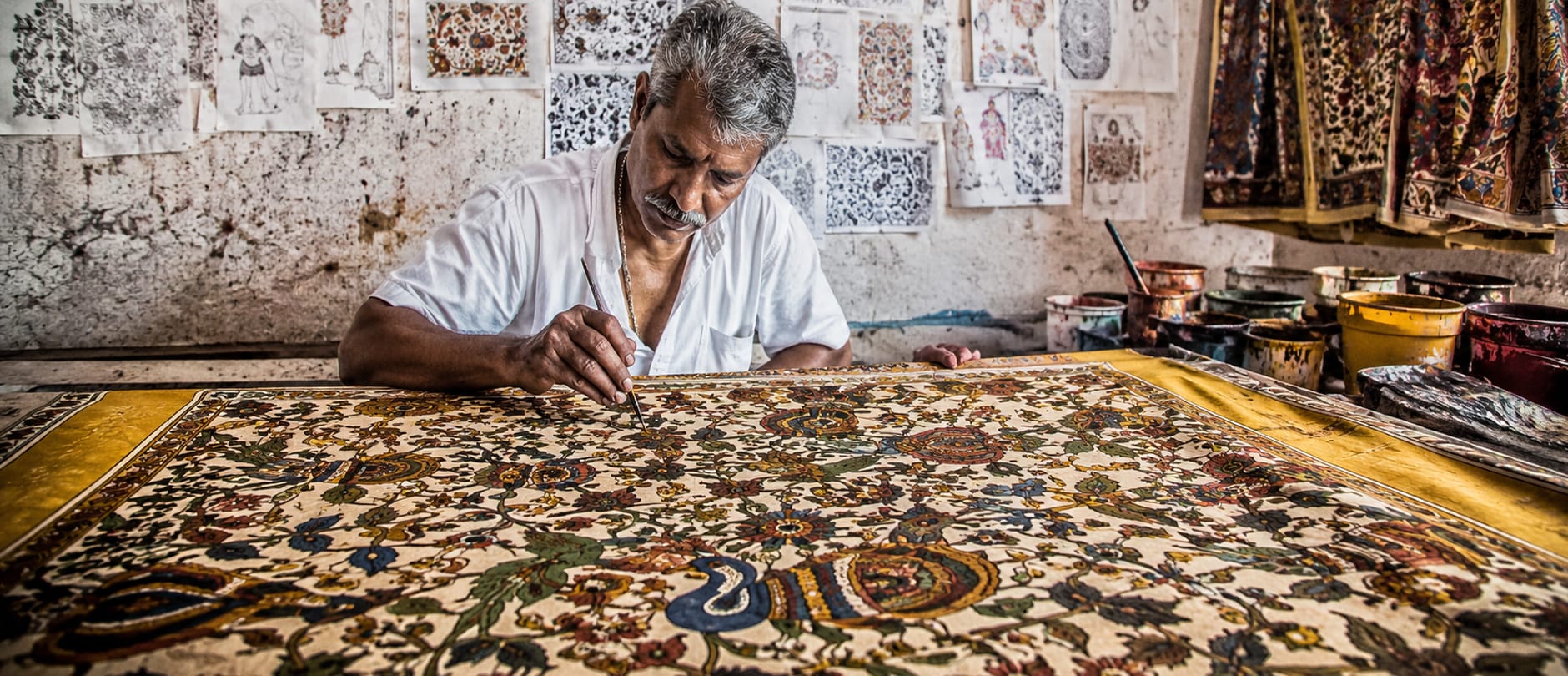
India’s textile heritage is filled with stories woven through art, culture, and craftsmanship. Among these timeless traditions, Kalamkari stands out as a remarkable expression of storytelling through fabric. What once adorned temple walls and narrated mythological tales has today transformed into one of the most elegant forms of wearable art. The journey of the Kalamkari saree is not just about fashion—it is about preserving centuries of artistry while adapting to modern lifestyles.
Today, the beauty of a Kalamkari Hand Printed Saree lies in its ability to connect tradition with contemporary style, making it a favorite among women who appreciate handcrafted fashion with cultural depth.
The Origin of Kalamkari Art
The word “Kalamkari” comes from two Persian words: kalam meaning pen and kari meaning craftsmanship. This ancient art form dates back over 3,000 years and flourished in regions of present-day Andhra Pradesh and Telangana.
Originally, Kalamkari artists used natural dyes and hand-carved blocks or bamboo pens to create intricate illustrations on cloth. These artworks were often used as temple backdrops, wall hangings, and scrolls depicting stories from the Ramayana, Mahabharata, and other mythological texts.
The detailed motifs, floral patterns, and spiritual themes made Kalamkari more than decorative art—it became a medium of cultural storytelling.
From Sacred Art to Textile Fashion
As trade routes expanded during the Mughal and colonial periods, Kalamkari gradually evolved beyond temple use. The art found admiration in international markets for its natural dyes, elaborate detailing, and handcrafted appeal.
Artisans began adapting the same storytelling techniques onto garments and fabrics. Over time, sarees became one of the most popular canvases for Kalamkari work. The transition was natural—Indian sarees already represented grace and tradition, while Kalamkari added artistic richness and individuality.
Today, Kalamkari sarees are appreciated not only for their visual beauty but also for the craftsmanship involved in every piece.
Types of Kalamkari Styles
Kalamkari art primarily developed into two distinct styles:
- Srikalahasti Style
This style is entirely hand-drawn using a pen-like tool. Artisans carefully sketch intricate motifs and mythological scenes, making every saree unique and artistic.
- Machilipatnam Style
This version relies more on block printing techniques. Beautiful floral patterns, paisleys, and decorative motifs are created using hand-carved wooden blocks and natural colors.
Both styles contribute to the charm of a Kalamkari Hand Printed Saree, offering different aesthetics while maintaining the authenticity of the craft.
The Role of Natural Dyes and Sustainable Fashion
One of the most admired aspects of Kalamkari is its eco-friendly production process. Traditional artisans use natural dyes extracted from flowers, roots, leaves, bark, and minerals.
In a world increasingly focused on sustainable fashion, Kalamkari has regained popularity for its environmentally conscious approach. Unlike mass-produced synthetic prints, handcrafted Kalamkari fabrics carry a human touch and a lower environmental impact.
This revival has made Kalamkari especially appealing to younger consumers looking for ethical and artisanal fashion choices.
Why Kalamkari Sarees Remain Timeless
Fashion trends change constantly, but Kalamkari sarees continue to remain relevant across generations. Their versatility allows them to be styled for festive occasions, office wear, cultural events, and even contemporary fashion statements.
The artistic motifs blend beautifully with various fabrics including cotton, silk, and linen, making them suitable for different preferences and seasons.
A well-crafted Kalamkari Hand Printed Saree is more than an outfit—it is a celebration of heritage, craftsmanship, and individuality.
Modern Interpretations of Kalamkari
Designers today are reimagining Kalamkari with modern silhouettes, fusion styling, and minimalist patterns. Contemporary adaptations include:
- Kalamkari sarees with geometric borders
- Fusion drapes paired with modern blouses
- Lightweight everyday wear designs
- Indo-western fashion featuring Kalamkari prints
Despite these innovations, the essence of the art remains deeply rooted in tradition.
Social media and digital marketplaces have also played a major role in bringing Kalamkari craftsmanship to global audiences, helping local artisans gain wider recognition.
Preserving an Artistic Legacy
Behind every Kalamkari saree is the dedication of skilled artisans who spend days, sometimes weeks, creating each masterpiece. Supporting handcrafted textiles helps preserve traditional Indian art forms that are at risk from machine-made imitations.
Choosing authentic handcrafted pieces encourages sustainable livelihoods for artisan communities and keeps centuries-old techniques alive for future generations.
Conclusion
The journey of Kalamkari from temple walls to modern wardrobes reflects the resilience and adaptability of Indian craftsmanship. What began as sacred storytelling art has evolved into a timeless fashion statement admired around the world.
A Kalamkari Hand Printed Saree carries more than patterns and colors—it carries history, artistry, and the soul of handmade tradition. In every brushstroke and motif lies a story that continues to evolve while staying connected to its roots.