
Terracotta Durga Idols are a significant part of the cultural and religious landscape of India, particularly in West Bengal, where the craft has flourished for centuries. These idols are not just religious symbols but are also a testament to the skill of rural artisans who transform simple clay into detailed representations of Goddess Durga. At Karuhaat, we aim to bridge the gap between these traditional craftsmen and modern homes, ensuring that this ancient art form continues to thrive in contemporary spaces.
The Heritage of Terracotta in Bengal
The word ‘Terracotta’ translates to ‘baked earth.’ In the heart of West Bengal, specifically in regions like Bankura and Bishnupur, this craft has a history that dates back to the Malla dynasty. Originally used to decorate the walls of ancient temples because stone was scarce, terracotta eventually moved into the realm of idol-making.
The Terracotta Durga Idols produced today carry forward this legacy. The use of the red soil found in the Rarh region of Bengal gives these idols their characteristic warm, earthy hue. Unlike mass-produced plastic or resin statues, each terracotta piece tells a story of the soil it came from and the hands that shaped it.
The Craftsmanship: From Clay to Creation
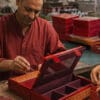
The process of making a terracotta Durga idol is laborious and requires high precision. It involves several stages:
- Clay Preparation: Artisans source fine-grained clay from local riverbeds. The clay is cleaned of impurities and mixed with sand to prevent cracking during the firing process.
- Molding and Shaping: For smaller idols and plaques, artisans use hand-molding techniques. The details of the Goddess—her ten arms, the lion, and the demon Mahishasura—are carefully carved using small wooden tools.
- Sun-Drying: Once the shape is finalized, the idol is left to dry naturally in the sun. This stage is critical; if the moisture is not removed slowly, the idol might break in the kiln.
- Firing: The dried clay is placed in a traditional kiln (bhatti) and fired at temperatures ranging from 700°C to 1000°C. This chemical transformation turns the soft clay into a hard, durable ceramic material.
- Finishing: Some idols are left in their natural burnt-orange state, while others are hand-painted using organic colors to highlight specific features.
Symbolism of the Durga Family
In the terracotta tradition, Goddess Durga is often depicted in the “Ekchala” style, where she is framed within a single backdrop along with her children: Lakshmi, Saraswati, Kartikeya, and Ganesha. This composition symbolizes family unity and the balance of power, wisdom, wealth, and auspiciousness.
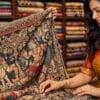
The terracotta medium adds a layer of humility to this powerful imagery. The “Durga Family Fresco” or the “Durga Wall Hanging” styles popular at Karuhaat capture this divine hierarchy in a flat, illustrative format that is perfect for home decoration.
Exploring the Karuhaat Collection
Karuhaat offers a diverse range of Terracotta Durga Idols designed to suit different spaces, from large wall displays to compact tabletops. Here are some of the key products available in our collection:
- Durga Family Fresco / Wall Hanging: These are large terracotta plaques designed to be hung on walls. They often feature the entire Durga family in a traditional layout. These pieces are ideal for living rooms or entrance halls.
- Exquisite Miniature Durga Idol: For those with limited space, these small figurines offer the same level of detail in a compact size. They are suitable for office desks or small home shrines.
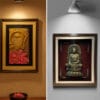
- Terracotta Durga in Frame: This product places the clay idol within a wooden or fiber frame, protecting the delicate clay while providing a modern aesthetic that fits well with contemporary interior design.
- Tabletop Durga Murti: A standing idol that showcases the three-dimensional form of the Goddess. These are often used during the Navratri or Durga Puja festivals for personal worship.
Why Choose Terracotta for Your Home?
Choosing a terracotta idol over modern alternatives has several benefits:
- Eco-Friendly: Terracotta is made from natural clay and is entirely biodegradable. Unlike idols made of Plaster of Paris (PoP), terracotta does not harm water bodies if immersed.
- Aesthetic Versatility: The neutral, earthy tones of baked clay complement various interior styles, including bohemian, rustic, and modern minimalist.
- Support for Artisans: By purchasing from Karuhaat, you directly support over 100 rural artisans who rely on these traditional crafts for their livelihood.
- Durability: When fired correctly, terracotta is a sturdy material that can last for generations if handled with care.
How to Style and Care for Terracotta Idols
To ensure your Terracotta Durga Idol remains a centerpiece of your home for years, follow these simple care tips:
- Placement: Keep the idol in a dry area. While terracotta is durable, prolonged exposure to moisture can cause the clay to soften or develop mold.
- Cleaning: Use a soft, dry brush or a microfiber cloth to remove dust. Do not use water or chemical cleaners, especially if the idol is hand-painted.
- Lighting: Use warm spotlights or traditional oil lamps (diyas) near the idol to enhance the shadows and textures of the clay carvings.
Conclusion
Terracotta Durga Idols represent a perfect blend of spiritual devotion and artistic expression. They serve as a reminder of India’s deep-rooted connection with nature and the enduring skill of its craftsmen. Whether you are looking for a sacred idol for your puja room or a unique piece of art for your home decor, the terracotta collection at Karuhaat offers authenticity and quality. Contact us for more information.